
Home
About
Services
Collaboration Tips
Media
Publications
Partners
Links & Bibliography
Contact Us
About Christopher Wilson
Mr.
Wilson is a
management
consultant and researcher based in Victoria, BC. He specializes in
issues of collaborative governance, regional stewardship and collective
intelligence. Unitl his retirement in 2017, he was a Senior Research
Fellow with the Governance Project at the University of Ottawa, where
from
1997 he
was a researcher, consultant and
lecturer. Between 2003-2006 he was also
the
managing partner of Invenire, an
Ottawa-based think tank that explored issues in governance,
stewardship and
collaboration.
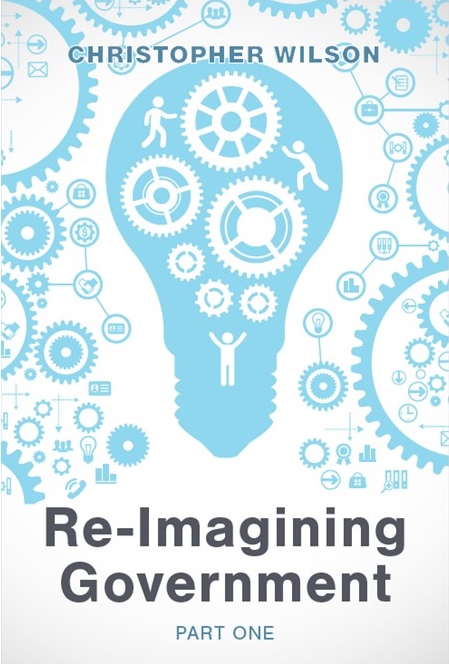 Mr. Wilson has
recently published a new book entitled, Reimagining
Government - Part 1
, a two-book series that was published in June of 2018. His previous book Intelligent
Governance
, was co-authored with Canada's leading governance
researcher, Gilles
Paquet, and it explored how to strike the ‘right governance fit’
in complex environments where knowledge, resources, and power are widely
distributed, and where processes must be collaborative. In such
situations, where different groups have something to contribute
towards joint outcomes, the challenge is how to sustain cooperation when
the partners
may only participate voluntarily in the pursuit of their own
objectives.
Mr. Wilson has
recently published a new book entitled, Reimagining
Government - Part 1
, a two-book series that was published in June of 2018. His previous book Intelligent
Governance
, was co-authored with Canada's leading governance
researcher, Gilles
Paquet, and it explored how to strike the ‘right governance fit’
in complex environments where knowledge, resources, and power are widely
distributed, and where processes must be collaborative. In such
situations, where different groups have something to contribute
towards joint outcomes, the challenge is how to sustain cooperation when
the partners
may only participate voluntarily in the pursuit of their own
objectives.
As a consultant, Mr. Wilson’s work has focused on the
management and evaluation of collaboration and partnerships. His most recent
assignment was working as a developmental evaluator with Canada's National Ballet
School in Toronto to help them scale up their Sharing Dance
program across the country. This work followed upon asssignments with PHE Canada's Health Promoting
Schools
initiative and the Canadian Active After School Partnership
. He has also worked on
collaborative projects with all three levels of government, local Ottawa
hi-tech companies, like Nortel and Mitel, and various community
organizations.
Christopher holds an MBA from the
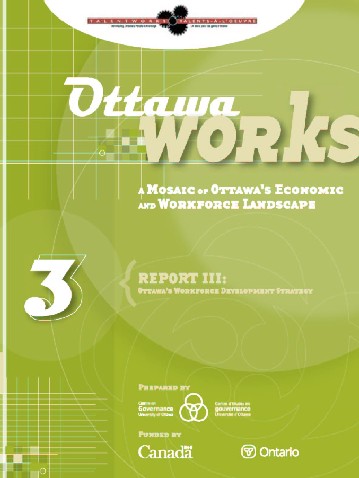
While at the University of Ottawa, Christopher led a team of researchers to assess the state of Ottawa's workforce, producing a series of three reports, collectively entitled Ottawa Works, which examined both the context and profile of Ottawa's talent pool and that proposed a set of comprehensive recommendations to align Ottawa's workforce with the realities of a 21st century knowledge economy. These reports became the basis of conversations among the key labour market stakeholders in Ottawa and ultimately the City's labour market strategy.
Until his retirement in 2017, Christopher was also
Vice President of theSocial Planning Council of
Ottawa
where he worked with various community leaders on issues of community economic
development, inclusion, access to basics, and voluntary sector supports. He is
also a long standing member of the
Throughout his career, the basis of Christopher's work has been the recognition of the fundamental need for individuals and organizations to find more effective ways to learn and work together. Despite the many overlapping and competing forces reshaping today's society, the pressure to achieve more effective systems of cooperation continue to be paramount.
To better
understand
the confluence of these changes requires new
frameworks and new paradigms, new
skills and organizational practices, improved levels of trust and transparency,
and more creative mechanisms for satisfying contingent cooperation
so that citizens, business people, and
governments can make better use of their respective resources to provide more
effective solutions to their shared challenges.